
Current Thoughts
(Mostly Hawaii)
The goodwill test for Sylvia Luke
Right in the middle of what can now clearly be called Phase Two of the Sylvia Luke story, the Lieutenant Governor took to Instagram on February 23rd to address the campaign donation controversy directly.
On the surface, the video is her attempt to explain what happened and clarify how her campaign handled the donations in question. But politically, the move is also something quite familiar in Hawaiʻi politics — when the headlines start to cool, but the questions remain, Lukeʻs most recent action is a classic direct appeal to voters themselves, in an effort to steady the ground while the formal investigative process continues in the background.
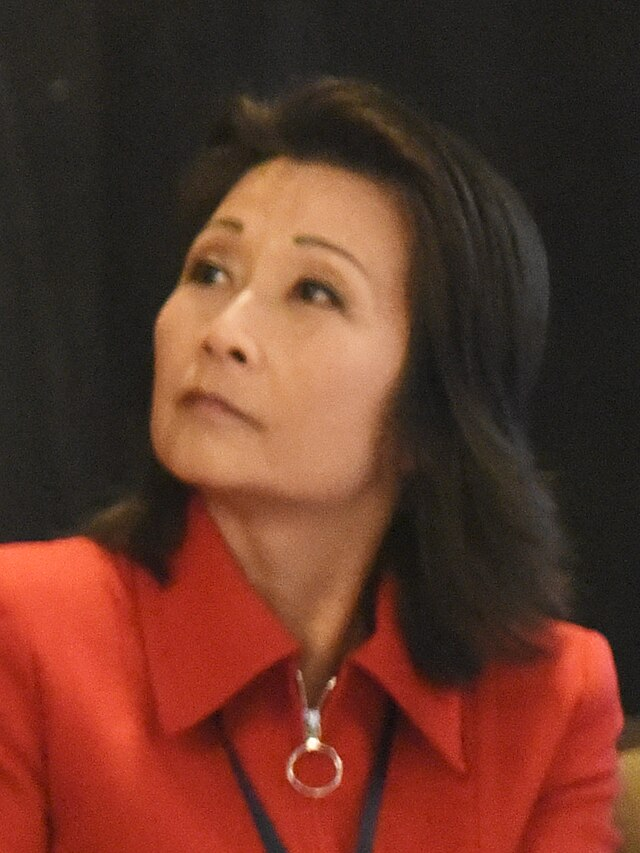
PC: Maryland GovPics, CC BY 2.0 https://creativecommons.org/licenses/by/2.0, via Wikimedia Commons
In the video, she presents from her perspective a clarification of the stories and actions of her campaign. She states that she has not personally enriched herself, never granted special favors in exchange for donations, and never violated campaign spending rules. She talked about how she has worked to keep her integrity and emphasized her transparency.
To demonstrate that, she outlined a plan to rectify the situation by putting up information on her campaign website and hired a consultant to look at her books to see if there are any other issues and to uphold compliance.
She, at the end of the video, does address that trust is earned, and it seems through this video that she is trying to regain or reaffirm that trust.
The video illustrates that the story remains firmly in Phase Two — the stage where clarification and positioning take place. While investigators continue their work, political actors are already shaping how the story will be understood by the public. Luke’s decision to address voters directly suggests that the interpretive phase has begun to form even before the investigative (phase three) is complete.
The second issue has to do with the effort by Luke to try to resolve all the questions and hope that the answers will assuage the target audience to both believe it and then support her as she potentially ramps up for re-election this year.
And who is the target audience, you ask?
Well, it would be the electorate itself that is not already tied to organizations backing her. The latest of these is the HSTA, which came out with its rather uniquely worded letter of support for Luke.
So the real question is whether the video answered the concerns of voters who are still looking at the situation and deciding what they think about it — and whether that will translate into support for Luke in the Primary.
Ultimately, the answer will come at the ballot box in the August 8 Primary. But before that, there may be signals about whether the video actually worked.
It really comes down to two things.
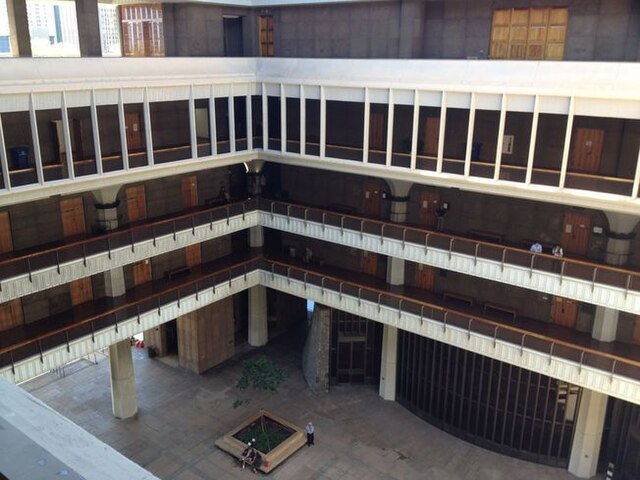
PC: TastyPoutine, CC BY-SA 3.0 https://creativecommons.org/licenses/by-sa/3.0, via Wikimedia Commons
First, whether it was convincing enough for any potential challenger to Luke in the Primary to decide to sit on the sidelines or file for candidacy to run against her. While there has been no announcement by anyone that they intend to make a challenge, a signal as to whether Luke is still seen as strong enough or not for reelection will be demonstrated by how others act, or do not act, as potential candidates.
That would lead to the second action, in which there is no real gauge as to how high or low “political goodwill” is for Luke. Political goodwill, while not a technical Political Science term, is something that exists. Defined, it describes a reservoir of public trust, patience, or tolerance that voters extend to a political leader or institution.
Another way to look at it, political goodwill is a kind of public credit line. Voters extend it to leaders they trust — but like any credit line, it can be drawn down quickly if the withdrawals exceed the deposits.
What a savvy political observer in Hawaii, therefore, should be looking for is whether Lukeʻs goodwill “bank,” if you will, with the electorate still has a positive balance, zero balance, or negative balance. One can assume her gathering of organizational support denotes that she is working to make sure the balances are in the positive, so that there is no question of whether she has the strength and ability to both run and win for re-election.
However, organizaitons donʻt vote for candidates – all they do is influence the voter. Its the individual voter – it’s the electorate that chooses the desired candidate. And in this case, the majority of votes cast wins.
So, the questions that come from this latest move are simple: is Luke seen as weak enough that someone will step forward to challenge her, and does she still have enough goodwill with voters to carry her through the Primary? Those answers come in Phase Three of this story — when voters interpret what they have heard, weigh it against what they believe, and decide whether to act on it at the ballot box.
However, as with many things in Hawai‘i politics, the investigation may determine the facts, but the political outcome may be decided much earlier by how voters interpret what they have already seen.
Phase two: When the noise fades but the questions remain
After the initial burst of attention, the Sylvia Luke story now feels a bit like a room where the oxygen has been pulled back to calm a fire. Media coverage has slowed, and expressions of support from key figures are beginning to surface.
What was once loud and fast-moving is now notably quieter. One could be forgiven for thinking, “Well, that didn’t take long to quiet down.”
However, in Hawai‘i politics, that shift typically marks the moment when a story moves from public reaction to a more measured institutional response.
Welcome, in other words, to “Phase two” of the story — clarification with a side of positioning.
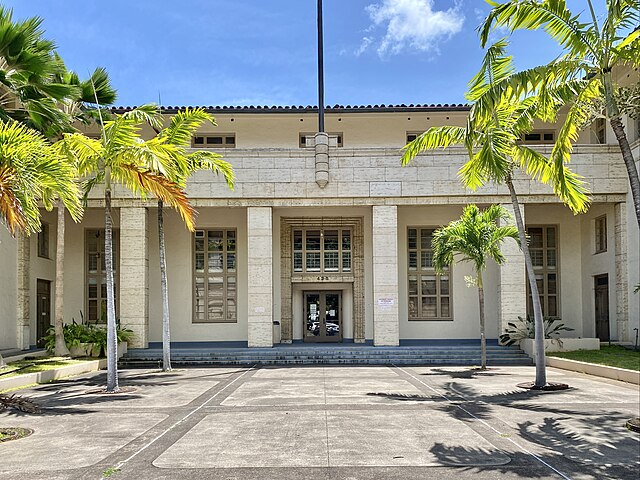

PC: w_lemay, CC BY-SA 2.0 https://creativecommons.org/licenses/by-sa/2.0, via Wikimedia Commons
The first side of this is clarification. That arrived relatively quickly on Friday the 13th, when the Attorney General held a press conference on the issue. What she laid out placed more formal framing around what will happen next.
One key signal came in her statement that she intends to hold press briefings roughly every two weeks going forward. While she will speak about the investigation, it also suggests that not much new information may emerge from each session. In other words, the focus may shift toward process, while substantive revelations move more slowly than the initial thunderclap of news that started this whole story.
Whether intentional or not, the effect of the AG’s approach may be to slow the pace — moving the conversation from fiery, sensational accusations toward a more measured rhythm built around “just the facts.” Seasoned observers of Hawai‘i politics may recall how then–Attorney General Margery Bronster adopted a similar communication cadence during the “Broken Trust” era involving Kamehameha Schools.
While the pace of the story seems to have slowed, cooled, and otherwise moved far off of headlines, it’s not to say that there ainʻt things afoot.
This is where the side of positioning comes in.
It was discovered by this blogger quite quickly after the last article came out through none other than Sylvia Lukeʻs campaign page on Facebook, which hadnʻt up until the three-day Presidential holiday weekend, seen much activity at all as of late.
It started with re-posting a statement from the ILWU Local 142. Entitled “Statement in support of Lieutenant Governor Sylvia Luke”, it was the first of several full-throated statements of support for Sylvia Luke at this time.
Other statements soon followed, from Senator Kurt Favella, The United Public Workers Local 646, Back the Blue founder Wayne Kaiwi and Kurt Tsuniyoshi who operates The Safety Store (a personal safety store) on King St. The last one that she posted was from Charlie Iona, District Contract Security Manager at Allied Universal.
All of the statements shared some common themes. The strongest among them is that they focus less on debating facts and more on defending personal and professional relationships, along with Sylvia Luke’s character. At the same time, the supporters address the situation indirectly by appealing to due process and allowing the legal process to unfold.
That aligns closely with what Attorney General Lopez has signaled.
Whether one agrees with that angle or not, the supporters are clearly asking people to view the situation through a lens of personal experience, shared values, and patience rather than attempting to litigate the matter publicly before all the facts are known.
Of course, an opposite narrative is beginning to take shape as well — one driven largely through media interpretation.

PC: Honolulu Star Advertiser, Public domain, via Wikimedia Commons
In the Sunday Star-Advertiser, two articles suggested possible directions this story could take. The first, by Dan Nakaso, raised the possibility that the controversy surrounding Luke could inspire primary challengers to emerge. As many political observers noted over the weekend, it would not be surprising if consultants and potential candidates were quietly evaluating scenarios and testing the waters.
Whether any of those conversations turn into actual filings remains to be seen.
The second article, from columnist David Shapiro, took an even more declarative tone, arguing that Luke’s political career may be finished regardless of how the Attorney General’s investigation concludes. The speed of that assessment shows how quickly the interpretive phase can move from process to political consequence, especially after signals like Governor Green’s decision to remain in Hawai‘i.
Taken together, these articles take the conversation in a very different direction. While supporters are calling for patience and process, the media narrative is already shifting toward political consequence — who might run, and whether the ending is already being written. Intentional or not, the combined effect has been to move the story quickly into Phase two — the interpretive phase.
What comes next is less about certainty and more about expansion.
As details continue to unfold, new voices and new interests may begin to enter the conversation — political figures, potential candidates, and institutional players who were largely silent during the opening stage. If Phase one was about self-identification and accusation, Phase two increasingly looks like a story about positioning.
Phase one: How the Sylvia Luke story is already reshaping Hawaiʻi politics
The story of campaign donations to Hawaiʻi Lieutenant Governor Sylvia Luke is in the “phase 1” –the allegation phase. But even at this early stage, several observations and questions stand out — not necessarily about guilt or innocence, but about what this moment is already doing to Hawaiʻi’s political landscape.
Here are some of those observations.
First Observation – Hindsight by the Legislature?
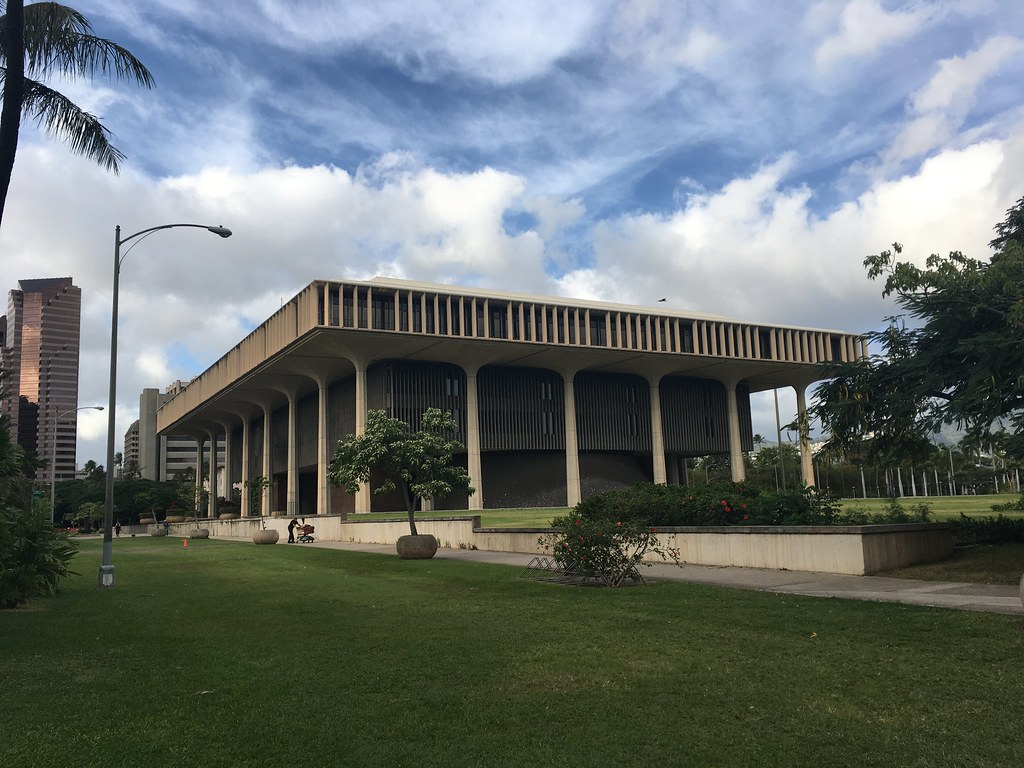
PC: PHwSF
In the run-up to the Primary Election in 2022, when Sylvia Luke ran for the Democratic Party’s nomination for Lt. Governor against former Honolulu City Council Chair Ikaika Anderson and former Mayoral candidate Keith Amemiya, it was very apparent that some of her support came from members of the legislature.
In an observation this blogger made at a 4th of July event at the Old Kona Airport pavilion for the Democratic Party in 2022, it was apparent that state legislators were openly backing Luke, with their presence there at her booth an unmistakable hint of their support. At the time, Luke was the Finance Chair in the House and was one of the core leaders that make up the Legislature – the Chairs of the Ways and Means committee in the Senate, Chair of Finance in the House, Senate President, and House Speaker.
So it stands to reason that they would back their fellow legislator moving up the ranks.
Now, with Luke publicly acknowledging she may be the legislator referenced in the ongoing investigation — and as the political implications of the story expand beyond those directly involved — a broader question emerges: how does this reshape perceptions of political judgment inside the Legislature?
Regardless of how the investigation ultimately concludes, legislators will continue participating in and signaling support for candidates seeking higher office. What may change, however, is how those decisions are viewed in hindsight, once new information enters the public discussion.
We’ll have to see.
Second Observation – Revisiting the Carpenters Ad campaign against Luke
PC: PHwSF
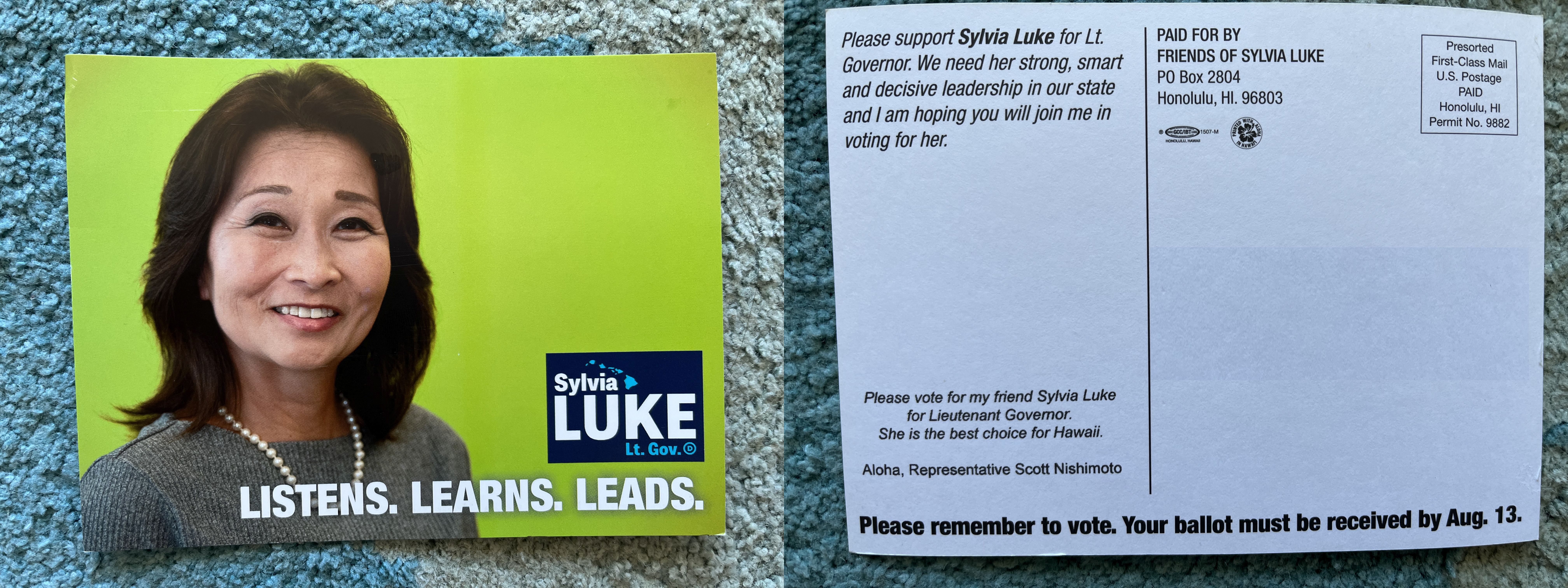
Again, going back to the 2022 campaign, one of the standout moments of the Democratic primary involved the Hawaiʻi Regional Council of Carpenters and advertisements supporting Ikaika Anderson’s bid for Lt. Governor over then–House member Sylvia Luke. Operating under the organization name “Be Change Now,” the campaign questioned donations Luke received from then-indicted Navatek head Milton Kao in connection with tax credits she supported in 2017.
Luke maintained at the time that the donations did not influence her legislative decisions — a position that still stands today.
Even though those ads were heavily debated and ultimately did not prevent Luke from winning at the ballot box, campaign narratives that fail electorally sometimes reappear years later under different circumstances. As the current story unfolds, it is natural for observers to revisit earlier campaign arguments — not necessarily because they were proven right or wrong, but because political memory tends to resurface when new questions emerge.
The result is that issues once thought settled can return to public conversation, particularly as political figures prepare for another election cycle.
Third Observation – Participation by the Governor

While still early in the story, the concentric circle of who is being touched by this issue continues to expand in interesting ways.
Consider the evolving role of Governor Josh Green.
Until Luke’s public acknowledgement and the ensuing investigations, the Governor largely appeared as a careful observer. When asked about the situation — including during appearances such as Hawaiʻi News Now’s Spotlight — he expressed a general hope that whoever was involved would ultimately be identified, reflecting what many in Hawaiʻi seemed to feel at the time: that the individual in question was unknown.
Once Luke said she may be the influential political figure referenced in FBI files and described how the money was received, the dynamic shifted quickly. Just days later, the Governor announced the cancellation of a long-planned trip to the Mainland for a National Governors Association conference, saying he would remain in Hawaiʻi “to ensure steady leadership for our state during this time.”
With that decision, the Governor’s attempt to project stability may also have elevated the political significance of the story.
Governors rarely make moves that can be interpreted as political signals without understanding how those signals will be read. What that signal ultimately means remains unclear — after all, this still feels like Phase 1 of the story — but the Governor may have unintentionally moved his role from passive observer to central actor in how events will now be interpreted.
Fourth Observation – The tender of the money
PC: Mario Lurig, CC0, via Wikimedia Commons
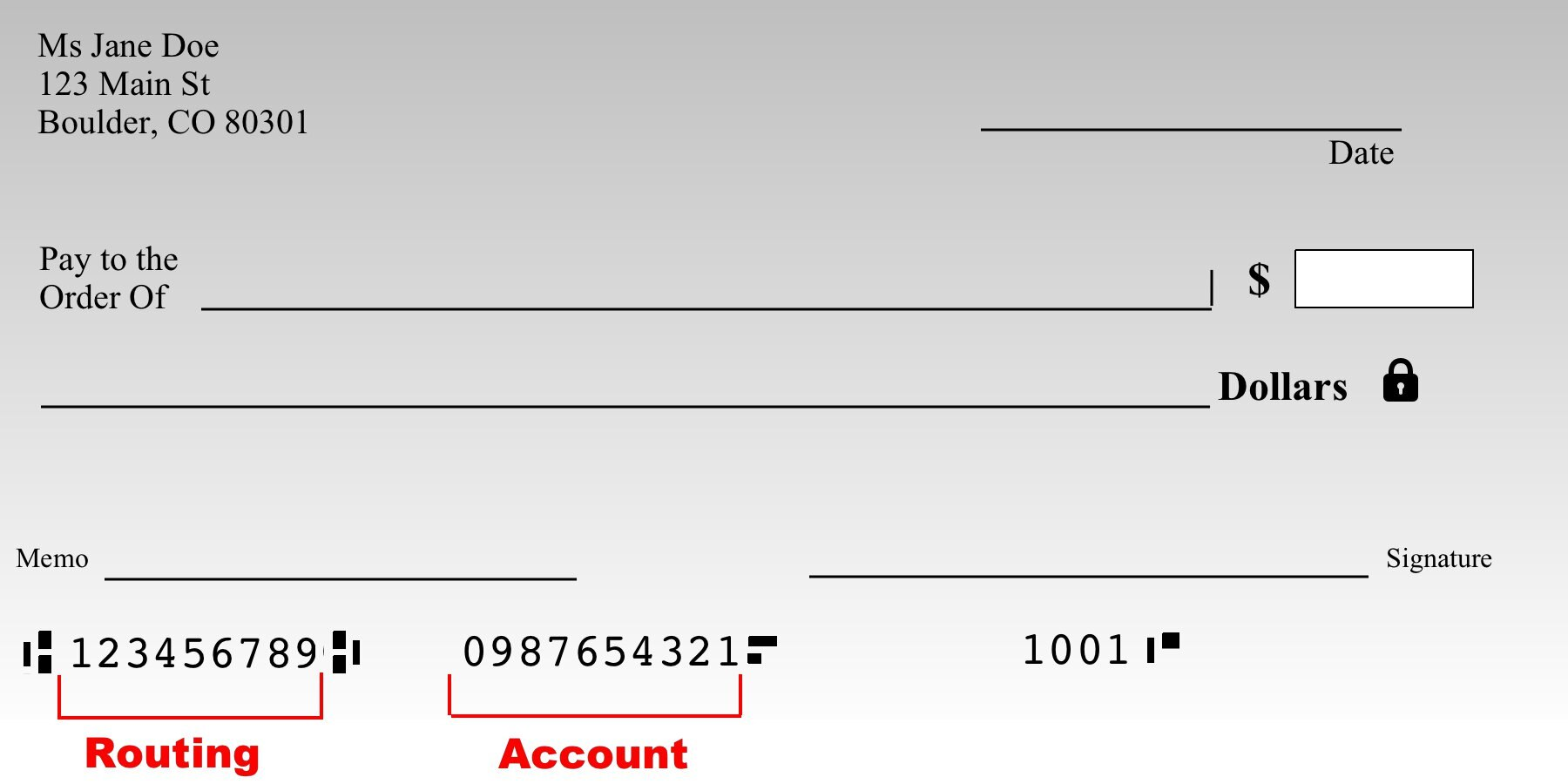
Throughout this saga, the public imagination has largely centered on the image of cash changing hands — the now-familiar reference to $35,000 in a paper bag.
Yet some of the transactions described publicly so far involve checks and campaign reporting amendments. The gap between that image and the known documentation is one reason many voters remain unsure about what exactly happened.
This creates what might be called narrative dissonance.
For months, public messaging and coverage have reinforced the image of a paper bag filled with cash. More recent descriptions, however, involve checks and subsequent campaign filing adjustments. That distinction naturally leaves observers asking whether the money being discussed represents a single event or multiple events that have become blended in public conversation.
Amounts alone do not establish whether funds came from the same source or from separate transactions, which adds to the confusion surrounding the story.
So the question emerges: are we seeing multiple events conflated into one public narrative? And if so, how did that occur?
The story may still be in Phase One, but in Hawaiʻi politics, developments move fast. The surrounding politics are already moving into the next stages — a clarification phase, as investigators begin communicating more openly about the process, and an interpretive phase, as observers attempt to make sense of what the disclosures mean in the larger political context. That interpretation remains early, shaped in part by public confusion over the nature of the disclosures and how they fit into the broader narrative.
But even before definitive answers arrive, this moment offers an early look at how quickly narratives form, evolve, and reshape the political landscape around them. And in Hawaiʻi politics, that process often tells us as much as the outcome itself.
Read past entries of Stan Fichtman and PoliticsHawaii.com!
Other sites that pick up PHwSF
Check out these other news aggregators that pick up Politics Hawaii in their feeds
Hawaii Free Press - Hawaii news aggrigator that is curated by Andrew Walden
All Hawaii News - Another Hawaii-based aggregator from Hilo, HI
Feedspot - Picks up blogs and other publications from all over.
Social Media Feeds
Here is where you can find Politics Hawaii posts on Social Media!
Facebook: Politics Hawaii
Nextdoor: S.J. Fichtman
Instagram (if you want to see nice photos): S.J. Fichtman
Periodically, the blog will also post on Medium, <https://politicshawaii.medium.com/>
Blogroll
Here are some of the other great blogs about Hawaii
Peter Kay's "Living in Hawaii"
Hawaii Free Press - Andrew Walden
Danny DeGraciaʻs Substack (link goes to subscription to read)
What am I listening to?
These are the Podcasters that I am listening to, try them out!
The Lincoln Project (on YouTube)
Chris Cillizza - who makes daily videos on politics (mostly national)
Who am I reading/getting news from
The publisher is choosy as to where the news comes from, here are some dependable sources he refer's to when reading up on topics
Civil Beat (Hawaii on-line newspaper)
Honolulu Star Advertiser (mostly paywalled, but you get free headlines)
The Best of The SuperflyOz Podcast
By Stan Fichtman
The best of my podcasts dating back from Jan. 2018.
Go to The Best of the SuperflyOz Podcast